
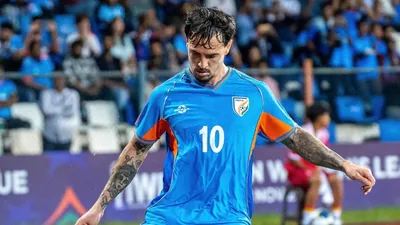
India’s 1-1 draw against Panama should not be read as proof that the gap between the Blue Tigers and the world’s top 50 has suddenly disappeared. Against opponents ranked 44th in the world, India did not spend 90 minutes merely protecting their penalty area. It should, however, alter the terms of the conversation around this team. They competed, scored through a repeatable attacking pattern, continued to look for openings after conceding, and survived the final phase without losing their shape.
Against Brazil and Uruguay, the score line may ultimately be less informative than whether those behaviours survive another jump. Panama showed India can withstand a higher level without abandoning their football. The next two matches will reveal whether that was an exceptional evening or the beginning of a genuinely more competitive international identity.
Fourteen members of their travelling squad had featured at the 2026 World Cup, and India entered the contest ranked 138th. That refusal to turn the final 20 minutes into pure damage limitation may be the most valuable part of the performance. Because panama were not ceremonial opposition, that matter. Because lalengmawia Ralte arrived a fraction late to close the shooter, and that fraction will become even more expensive against Brazil’s quicker combinations and superior execution, valencia’s goal came. India therefore cannot carry only the aggression of Bengaluru into Kolkata; they must carry the compactness too.
The difference in pedigree was enormous, yet the game itself rarely looked like a mismatch of that scale. Ryan Williams’ 41st-minute opener came from purposeful movement rather than chaos: Akas Mishra advanced the move from the left, Williams attacked the space behind the defensive line and finished decisively. It was the kind of goal India can reasonably attempt to reproduce against stronger sides. The more revealing period came after Omar Valencia equalised in the 68th minute. India had an obvious excuse to retreat. Instead, Khali Jamil’s side continued to release Ashique Kuruniyan down the left and manufactured two late chances, first for Edmund Laridinka and then for Manvir Singh. The second lesson is structural. Panama still created enough danger to expose where India remain vulnerable. The spaces between midfield and defence, especially the channels outside the centre-backs, will need to be narrower and better protected.
