
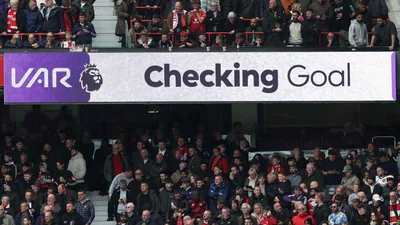
UEFA has announced a new public platform aimed at clarifying the circumstances under which the video assistant referee (VAR) will intervene during matches. This initiative comes as European football prepares for a shift towards fewer reviews and increased authority for on-field officials, starting in the 2026-27 season. The goal is to streamline the decision-making process and enhance the flow of the game.
UEFA Aims for VAR Clarity Amid Growing Frustration
Roberto Rosetti, UEFA’s managing director of refereeing, has addressed the increasing dissatisfaction with the Video Assistant Referee (VAR) system in an interview with BBC Sport. He acknowledged that many feel VAR’s impact on football has been negative, saying, “We realise that everywhere now there is not any satisfaction about how VAR is impacting football.” Rosetti emphasized the need to focus on the context of plays rather than minute details, stating, “It’s football, not PlayStation. We need to be very, very careful.”
Originally, VAR was intended to correct significant errors and missed incidents during matches. However, Rosetti noted that its application has expanded to include marginal contacts and isolated moments that can look different when viewed in slow motion. UEFA maintains that VAR should only intervene in “clear and obvious errors or serious missed incidents in match-changing situations.”
To restore VAR to its intended purpose, UEFA aims to encourage referees to make decisive calls on the field, limiting VAR’s role to situations with clear evidence. Rosetti remarked, “The referee must referee the match,” indicating that some recent on-field reviews have strayed from the essence of the game.
Additionally, UEFA’s ‘Clear Line’ initiative seeks to standardize the interpretation of rules across European competitions and domestic leagues. Handball decisions, in particular, have often yielded inconsistent outcomes across different countries, including England, Spain, Italy, Germany, and France. Rosetti stated, “The idea is to be more consistent in the application of the laws,” while acknowledging that complete uniformity in subjective decisions may not be achievable.
